
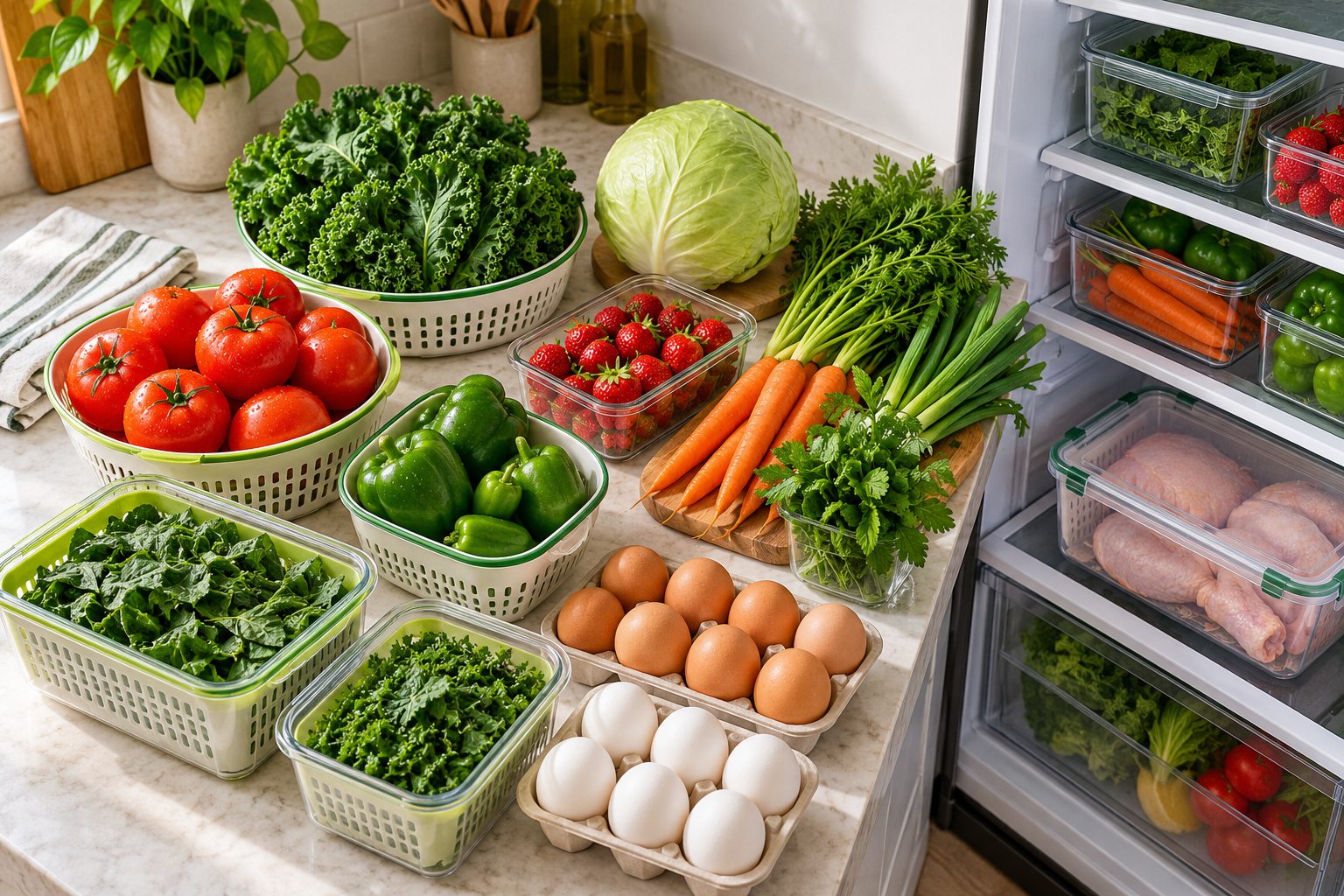
Keeping fresh food in good condition can be difficult in Nigeria, where warm weather, long journeys from market to home and interruptions to electricity can shorten the useful life of vegetables, fruit, eggs and poultry. The solution is not one storage trick for everything. Different foods need different levels of airflow, moisture and temperature.
Quick safety rule: keep raw poultry separate from food that will be eaten without cooking, refrigerate perishable food promptly, and never taste questionable food to decide whether it is safe.
This practical guide explains how to organise fresh food at home, reduce avoidable spoilage and make safer decisions during a power interruption. It is based on guidance from the World Health Organization, NAFDAC, the US Food and Drug Administration and FoodSafety.gov. Storage time varies with freshness at purchase, handling, temperature and the reliability of the cold chain.
Fresh food storage in Nigeria: the quick-reference table
| Food | Best place | How to prepare it for storage | Main mistake to avoid |
|---|---|---|---|
| Leafy greens: kale, lettuce and scent leaf | Refrigerator crisper | Remove damaged leaves; keep dry with a clean paper towel in a breathable container | Sealing wet leaves in an airtight bag |
| Tomatoes | Counter until ripe; refrigerate ripe tomatoes if necessary | Keep in a single layer away from direct sun | Storing bruised tomatoes with sound ones |
| Peppers | Refrigerator crisper | Store dry and whole in a ventilated bag or container | Washing and leaving them wet before storage |
| Broccoli, cabbage and beetroot | Refrigerator crisper | Keep dry; wrap loosely or use a breathable container | Cutting everything before it is needed |
| Strawberries | Refrigerator | Remove damaged berries and keep the remainder dry | Washing the full pack long before eating |
| Fresh herbs | Refrigerator | Wrap loosely in a barely damp clean towel or stand suitable herbs in a small amount of clean water | Crushing leaves or trapping excess water |
| Eggs | Refrigerator when a reliable cold chain is available | Keep in their carton and maintain a steady temperature | Using cracked eggs or repeatedly moving chilled eggs into warm conditions |
| Fresh chicken or turkey | Bottom refrigerator shelf at 4°C or below, or freezer | Place in a sealed, leak-proof container | Allowing raw juices to contact produce or ready-to-eat food |
Start with the five rules that prevent most waste
1. Buy with a storage plan
Before ordering, decide what will be cooked first, what belongs in the refrigerator and what should be frozen. Buy smaller quantities of very delicate produce when you know electricity or refrigeration will be unreliable. Select food without deep bruises, broken skin, leakage, mould or unpleasant odour.
2. Sort everything as soon as it arrives
One damaged tomato or strawberry can speed up deterioration around it. Separate bruised items for immediate use and discard anything rotten or mouldy. Do not place a warm delivery carton directly into a clean refrigerator without first checking and organising its contents.
3. Control moisture
Leafy vegetables need humidity, but visible water trapped on their surfaces encourages sliminess and decay. If produce is washed before storage, drain it and dry it thoroughly. In most households, it is simpler to store produce dry and wash it under safe running water shortly before preparation.
4. Separate raw poultry from produce
Keep raw chicken and turkey in a closed, leak-proof container on the lowest shelf so their juices cannot drip onto vegetables, fruit or cooked food. Use different chopping boards where possible, and wash hands, knives, boards and work surfaces after handling raw poultry. The WHO identifies separating raw and cooked food as one of its five essential food-safety practices.
5. Use the oldest suitable food first
Place newly purchased food behind older food that is still wholesome. Label cooked dishes and frozen products with the date. A simple “first in, first out” routine prevents good food from being forgotten at the back of the refrigerator.
How to store leafy vegetables and herbs
Kale, lettuce, mint, thyme and scent leaf lose moisture quickly. Begin by removing ties and damaged leaves. Store them away from raw poultry and strong airflow. A clean paper towel can absorb condensation inside a container, but the container should not compress the leaves.
- Kale and lettuce: keep cool, dry and loosely contained. Replace a wet paper towel.
- Mint and soft herbs: keep the stems hydrated with a small amount of clean water where practical, or wrap loosely in a barely damp towel.
- Thyme: store dry in a breathable container; use promptly if the leaves darken or become slimy.
- Scent leaf: protect it from crushing and excess water. Freeze chopped leaves for cooked dishes when you cannot use them promptly.
For a more detailed vegetable-by-vegetable explanation, read our guide on how to store fresh vegetables and keep them fresh longer.
How to store tomatoes, peppers, cabbage and broccoli
Keep firm, unripe tomatoes at room temperature in a shaded, ventilated place. Once fully ripe, refrigeration can slow further deterioration when they will not be used immediately. Their texture and flavour may improve after returning to room temperature before serving.
Store bell peppers and habanero peppers dry in the refrigerator. Whole peppers generally retain quality better than cut peppers. Refrigerate cut peppers in a covered container and use them promptly.
Cabbage stores best when left whole until required. Remove only damaged outer leaves. Broccoli should be kept cool and allowed some airflow; do not trap it in a wet, completely sealed bag. Beetroot keeps better when excess leafy tops are removed, leaving a short stem so the root does not lose moisture rapidly.
How to store fruit and strawberries
Handle strawberries gently because damaged berries deteriorate rapidly. Check the pack, remove any mouldy or leaking fruit, and refrigerate the sound berries in a shallow container. Wash only the portion you are ready to eat, then dry it with a clean towel.
Keep whole fruit separate from raw meat and poultry during transport and storage. The FDA recommends washing produce under running water before preparation or eating; it does not recommend soap, detergent or commercial produce wash because produce is porous and may absorb residues.
How to store eggs safely
Egg handling depends on how the eggs were supplied. Eggs that have entered a refrigerated cold chain should stay refrigerated. Keep them in their original carton rather than in the refrigerator door, where temperatures fluctuate whenever the door opens.
- Discard eggs with cracked, leaking or badly soiled shells.
- Do not wash eggs and return them wet to storage.
- Cook eggs until the white and yolk are firm unless a recipe uses an appropriately treated egg product.
- FoodSafety.gov lists refrigerated raw shell eggs for three to five weeks when they have been handled continuously at 4°C or below; do not apply that period to eggs with an unknown or interrupted cold chain.
How to store fresh chicken and turkey
Fresh poultry is highly perishable. Refrigerate it immediately at 4°C or below and cook it within one to two days, or freeze it. Keep it sealed on the bottom shelf. Do not wash raw chicken: splashing water can spread microorganisms around the sink, worktop and nearby food.
Thaw frozen poultry in the refrigerator, in cold water changed regularly, or in a microwave when it will be cooked immediately. Do not thaw it on the kitchen counter. Cook poultry thoroughly; a food thermometer is the most dependable way to confirm that the centre has reached a safe temperature.
What to do during a power outage
A refrigerator thermometer removes guesswork. FoodSafety.gov recommends keeping the refrigerator at 4°C or below and the freezer at −18°C or below.
- Keep refrigerator and freezer doors closed.
- An unopened refrigerator generally keeps food cold for about four hours.
- A full, closed freezer can hold a safe temperature for about 48 hours; a half-full freezer for about 24 hours.
- Use ice or frozen gel packs in a cooler if the interruption will be longer.
- Discard perishable food—including poultry, eggs, cut produce and leftovers—that has remained above 4°C for two hours or more. When the surrounding temperature is above 32°C, the limit is one hour.
- Never taste food to test its safety. When its time and temperature history are uncertain, discard it.
Uncut vegetables and whole fruit may remain usable after an interruption if they show no rot, mould or contamination, but cut produce requires stricter temperature control.
A weekly routine that saves food and money
- Delivery day: inspect, sort and store every item immediately.
- Twice a week: check containers for condensation and remove deteriorating items.
- Before shopping: look through the refrigerator and plan meals around what should be used first.
- Every week: clean spills and check the refrigerator thermometer.
- Every month: review frozen food labels and plan meals that use older items.
Frequently asked questions
Should vegetables be washed before refrigeration?
Washing is safe when you use clean water and dry the produce thoroughly, but moisture left on vegetables can speed deterioration. For many households, storing vegetables dry and washing shortly before preparation is the easier option.
Can I keep vegetables fresh without a refrigerator?
Some whole produce, including unripe tomatoes, can remain in a cool, shaded, ventilated place. Leafy greens, cut produce, strawberries and other highly perishable items require refrigeration for safety and quality. Buy smaller quantities when dependable refrigeration is unavailable.
Can mould be cut off a tomato or strawberry?
Soft, high-moisture produce can be contaminated below the visible surface. Discard mouldy tomatoes, berries and leafy vegetables rather than cutting away only the visible mould.
Where should raw chicken sit in the refrigerator?
Place it in a sealed, leak-proof container on the lowest shelf, below produce and cooked or ready-to-eat food.
How can I order fresher food with less waste?
Plan quantities around the meals you expect to cook, choose only the sizes you can use, and arrange delivery for a time when somebody can refrigerate perishable items promptly. Browse Vizik Farm Market products or review our nationwide delivery information before ordering.
Final checklist
Store food according to its needs, keep it dry where appropriate, maintain a refrigerator temperature of 4°C or below, separate raw poultry, monitor power interruptions and use older food first. These habits protect quality, reduce unnecessary waste and make everyday food handling safer.
This article provides general food-storage education, not medical advice. People who are pregnant, elderly, immunocompromised or caring for young children should follow advice from a qualified health professional and local food-safety authorities.
No comments yet. Be the first to share a helpful thought or question.